

Being in the 21st century means having access to better technology, stronger materials, and more advanced skills than ever before. But it hasn’t always been this way. Scaffolding has changed dramatically over time, and the methods used in the past were very different from what we see on sites today.
It’s easy to assume scaffolding has always looked and worked the way it does now, but that’s not the case. In this blog, we’ll explore how scaffolding has evolved through the years, the techniques that were once used, and just how much more challenging working at height would have been in earlier times.
How Scaffolding Started
Scaffolding can be traced back to around 2600 – 2500 BC in Ancient Egypt, where it was used during the construction of the pyramids and other large stone structures. The methods were very different from what we see today. Instead of full scaffold systems, builders mainly relied on large ramps made from mudbrick or stone, which allowed workers to drag heavy blocks into position as the pyramid grew taller. In some areas, simple timber poles and wooden platforms were likely used to give workers a place to stand while working at height, particularly when carrying out more detailed finishing work.
Scaffolding in Ancient Rome
As construction methods developed, the Romans began using more structured forms of scaffolding to support their large and ambitious building projects. Around 200 BC to 400 AD, timber scaffolding was commonly used when constructing aqueducts, bridges, amphitheatres, and public buildings. Builders would create wooden frames and platforms to help workers reach higher areas safely while placing stone and carrying out detailed work.
In many cases, small holes were built into the walls of structures to support wooden beams, which could hold up platforms as the building grew taller. Compared to the basic methods used in Ancient Egypt, Roman scaffolding was more organised and practical, allowing workers to move around structures more easily while continuing construction at height.
Scaffolding in the Medieval Period
During the medieval period, roughly between 1100 and 1500, scaffolding became a more familiar part of large building projects across Europe. Huge stone cathedrals, castles, and churches were often built over many years, sometimes even decades, which meant workers needed reliable ways to reach higher levels as the structures slowly took shape.
Timber was still the main material used, with wooden poles, boards, and platforms forming simple but effective scaffold frames around the sides of buildings. In some cases, scaffolding would remain in place for long periods while work continued higher up. Builders also placed wooden beams into gaps within the walls to support working platforms as construction progressed.
Although the methods were still basic compared to modern systems, scaffolding during this time played a much bigger role than before. It allowed builders to work on taller and more detailed structures, particularly when adding stonework, towers, and decorative features high above ground level.
The Move Between Modern Scaffolding
As construction continued to develop through the 18th and 19th centuries, scaffolding began to change more noticeably. Timber was still widely used, but builders started looking for stronger, more reliable materials that could support heavier loads and taller structures. With towns and cities growing quickly, buildings were becoming larger and more complex, which meant safer and more stable access was needed.
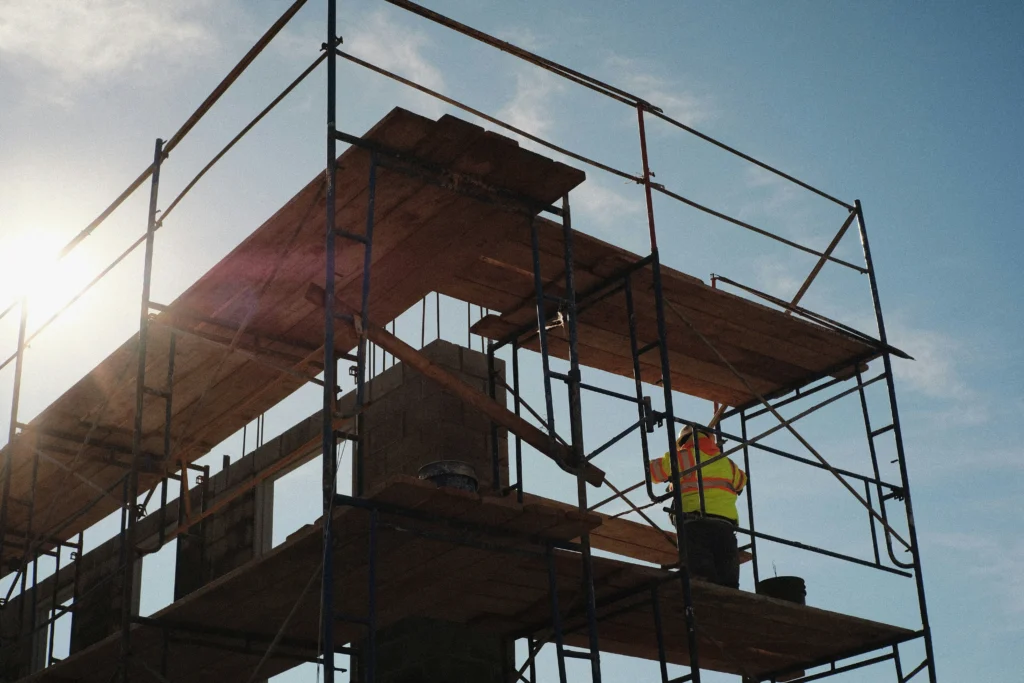
By the early 20th century, metal scaffolding started to appear, offering greater strength and durability than wood. Steel poles and fittings allowed structures to be built higher and more securely, and they could be reused across multiple projects. This marked a major turning point, as scaffolding became more standardised and easier to assemble compared to the earlier, fully timber-built systems.
Then vs Now
Looking back, the change over time is easy to see. Early builders in Ancient Egypt used ramps and simple wooden platforms to help construct the pyramids. The Romans introduced more organised timber frameworks to support large public buildings. During the medieval period, scaffolding became essential for building tall cathedrals and castles, often staying in place for years at a time.
The biggest shift came with the move from timber to metal in the 19th and 20th centuries. Steel made scaffolding stronger, more stable, and reusable, which helped shape the systems we recognise today.
While the purpose has always stayed the same, providing safe access to work at height, the materials, safety standards, and level of planning have improved massively. From ancient stone structures to modern homes and commercial buildings, scaffolding has continued to evolve alongside the construction industry.
Conclusion
From the earliest pyramid builds to the complex projects we see today, scaffolding has come a long way. What started as mud ramps, timber poles, and basic platforms has developed into strong, carefully designed systems that make working at height safer and more efficient than ever before. Each stage in history has played a part in shaping the modern scaffolding methods we rely on today, with better materials, improved planning, and much higher safety standards now at the heart of every job.
Need Scaffolding for Your Next Project?
Whether you’re planning a home renovation, a commercial build, or maintenance work at height, having the right scaffolding in place makes all the difference. At Safeway Scaffolding, we provide safe, reliable, and professionally installed scaffolding tailored to suit projects of all sizes.
If you’re looking for dependable support for your next job, get in touch with Safeway Scaffolding today. Our team is ready to help you plan the right setup and make sure your project runs smoothly from start to finish.